The SDR to AE Handoff in 2026: How to Stop Losing Booked Outbound Meetings Between Teams
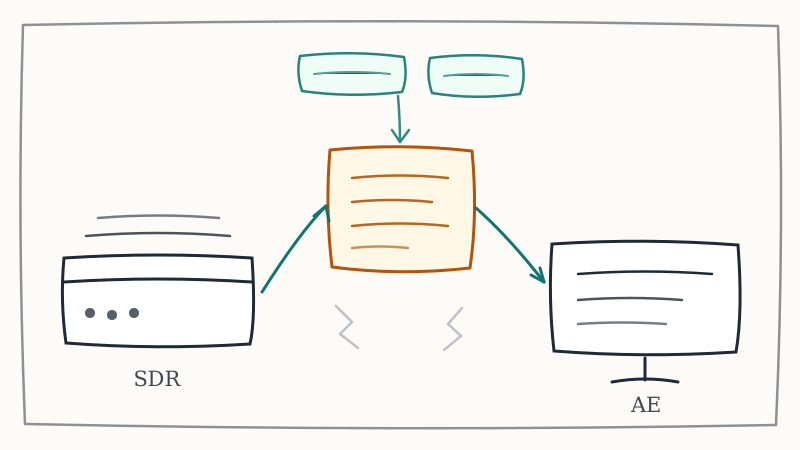
Most outbound teams treat a booked meeting as the finish line. It is not. It is a transfer, and transfers are where things get dropped. The SDR who found the account, picked the angle, handled the reply, and won the calendar slot hands all of that to an account executive who has seen none of it, and the AE walks into the call reconstructing context from a one-line calendar description. The prospect notices. That is how a meeting that took four weeks of sequencing to create turns into a discovery call that goes nowhere.
At GroomLead we engineer outbound systems on a pay-per-lead basis, which means a meeting that does not convert is our problem, not just the client’s. That incentive forces a specific discipline: the handoff has to be a documented step with its own inputs, its own SLA, and its own failure metrics. This playbook is that step.
Why the handoff leaks
The gap is structural, not a people problem. Four things cause nearly every leak.
The context lives in the wrong place. The signal that made the account worth touching, the specific line in the email that got the reply, the objection the prospect raised before agreeing to the meeting: all of that sits in a sending tool, an inbox, and an SDR’s head. The CRM gets a meeting record and a stage change.
The two roles are measured on different things. An SDR compensated on meetings booked optimizes for booked meetings. An AE compensated on closed revenue optimizes for qualified pipeline. Those are not the same target, and the handoff is exactly where the difference shows up. Without a shared qualification bar, you get volume on one side and rejection on the other.
The clock keeps running. A meeting booked on Tuesday for the following Monday has six days of decay in it. If nobody re-confirms, re-establishes the reason for the call, or notices that the prospect’s situation changed, you are relying on the prospect’s memory of an email they skimmed.
Nobody owns the gap. The SDR considers the job done at booking. The AE considers the job started at the call. The hours in between have no owner, which is why they are the hours where meetings quietly become no-shows.
The handoff brief: six fields, no more
Long handoff templates do not get filled in. The brief has to be short enough that an SDR completes it in under three minutes and an AE reads it in under sixty seconds. Six fields do the work.
1. The trigger. Why this account, right now? Not the ICP rationale, the specific event. A funding round, a new hire in the buying role, a competitor’s logo appearing on their site, a visit to a pricing page. Buying-signal intelligence tools exist to produce exactly this. CAM turns job changes, social listening, competitor connections, and website activity into lead lists, and whichever of those signals pulled the account into the sequence is the single most useful line in the brief. An AE who opens with the trigger sounds informed. An AE who opens with “so tell me about your business” sounds like a cold call.
2. The angle that worked. Which message got the reply, and what did it claim? If the SDR’s email promised a specific outcome, the AE needs to know, because the prospect accepted the meeting on the basis of that promise. Mismatched expectations between the email and the call is the most common reason a booked meeting produces no second meeting.
3. The reply thread itself. Not a summary, the actual words. This is where reply tooling matters: when every sending account’s replies land in one place, the thread is retrievable instead of lost in a mailbox nobody else can open. Underfive.ai runs a unified inbox for every sending account with AI inbox agents that label replies, draft responses in under five minutes, and book meetings, and the labels those agents apply are themselves handoff data. A reply labelled as a pricing question is a different call than a reply labelled as a referral to someone else.
4. The qualification state. What has actually been verified versus assumed. Budget unknown, timing unknown, but role confirmed and problem confirmed is a perfectly good handoff. Pretending all four are confirmed is not.
5. The next-step ask. What is the SDR’s stated purpose for the meeting, in the prospect’s language? “Twenty minutes to see whether our data coverage fits their European segment” is a brief. “Discovery” is not.
6. The known objection. Anything the prospect pushed back on before agreeing. Most prospects raise their real objection once, early, and casually. Capturing it means the AE can address it in the first five minutes instead of discovering it in the last five.
The SLA around the transfer
The brief is the content. The SLA is the timing, and it has three clauses.
Brief completed at booking, not later. The field that gets lost is always the one filled in from memory the next morning. Make the brief a condition of marking the meeting booked, not a follow-up task.
AE acknowledges within four working hours. Acknowledgement is not a formality. It is the AE’s chance to reject a meeting that misses the qualification bar while the SDR can still do something about it, and to ask for the one missing piece of context before the prospect goes quiet.
Prospect hears from the AE before the call. One short message from the person who will actually run the meeting, referencing the trigger and confirming the next-step ask. This single step does more for no-show rate than any other part of the handoff, because it converts an abstract calendar block into an appointment with a named human.
The shared qualification bar
A handoff cannot work if the two sides disagree on what a valid meeting is. Write the bar down and keep it to conditions both roles can observe.
A meeting passes if the contact holds or directly influences the relevant role, the account fits the ICP on the firmographic criteria you actually screen for, the prospect has acknowledged a problem in the area you sell into, and the prospect agreed to a specific purpose rather than a vague “sure, send a time.”
A meeting fails if any of those is absent. Failing is fine, and it should be cheap: the AE declines, the reason is recorded against one of the four conditions, and the SDR either fixes the gap or releases the account back to nurture. What is expensive is accepting a meeting that fails the bar, running it, and then logging it as a lost opportunity. That pollutes your conversion data and teaches you nothing.
Compensation has to follow the bar. If SDRs are paid on meetings booked rather than meetings accepted, the bar is decorative. Pay on accepted meetings and the behaviour corrects itself within a quarter.
Four metrics that expose a leaky handoff
You do not need a dashboard. You need four numbers reviewed weekly.
Acceptance rate. Accepted meetings divided by booked meetings. Below roughly 80 percent and your qualification bar is either too vague or being ignored. Above 98 percent and your AEs are rubber-stamping rather than screening.
Brief completeness. The share of accepted meetings whose brief has all six fields. This is the leading indicator. It degrades before conversion does, and it is the only one of the four you can fix the same day you notice it.
Time to AE acknowledgement. Median hours from booking to acknowledgement. When this drifts past a day, pre-call outreach stops happening, and no-shows follow.
Held-to-second-meeting rate, split by brief completeness. This is the number that settles arguments. Compare meetings with complete briefs against meetings with incomplete ones. If the complete-brief cohort converts materially better, you have a measured business case for enforcing the brief, not an opinion about process hygiene.
Where to start
Pick the next ten booked meetings. Require the six-field brief on all of them, have the AE acknowledge each within four hours, and have the AE send one pre-call message referencing the trigger. Then compare those ten against your previous ten on held rate and second-meeting rate.
Ten meetings is a small enough sample to run this week and a large enough one to see the gap. If the difference is real, you do not need to sell the process internally. The numbers will do it, and the handoff stops being the place where good outbound goes to die.
Ready to engineer your own GTM system?
GroomLead engineers outbound systems for B2B teams, and builds the tools inside this post.
Book Strategy Call