Sales Champion Tracking: Turn Customer Job Changes Into Warm B2B Pipeline
Somewhere in your CRM right now is a closed-won deal from eighteen months ago. The champion who bought from you, the person who fought for budget and pushed the contract through legal, has since left that company. They are at a new job today, with a new budget, a new set of problems, and zero memory of ever being “cold” to you.
Most outbound teams never notice. The contact record goes stale, the relationship goes cold, and a competitor’s SDR ends up in that champion’s inbox first, treating a warm, pre-sold buyer like a brand new lead.
Champion tracking fixes that gap. It is the practice of monitoring your past and current customer contacts for job changes, so you can reach out the moment they land somewhere new, while the relationship is still fresh and the trust is already built. Teams that run this systematically report meaningfully higher close rates and shorter cycles on champion-sourced deals compared to standard cold outbound, because half the sales process (proof that your product works) is already done.
Why job changes are the highest-intent signal in B2B
A prospect filling out a “request a demo” form is a guess about intent. A former champion starting a new VP role at a company that fits your ICP is closer to a certainty. They know your product, they know what it fixed for them, and they now have the authority to buy it again.
The problem is operational, not strategic. Watching LinkedIn manually for hundreds of past contacts does not scale, and by the time someone notices a job change in a spreadsheet, the champion has usually already evaluated three other vendors introduced by their new colleagues.
The five-layer stack we run for champion-sourced pipeline
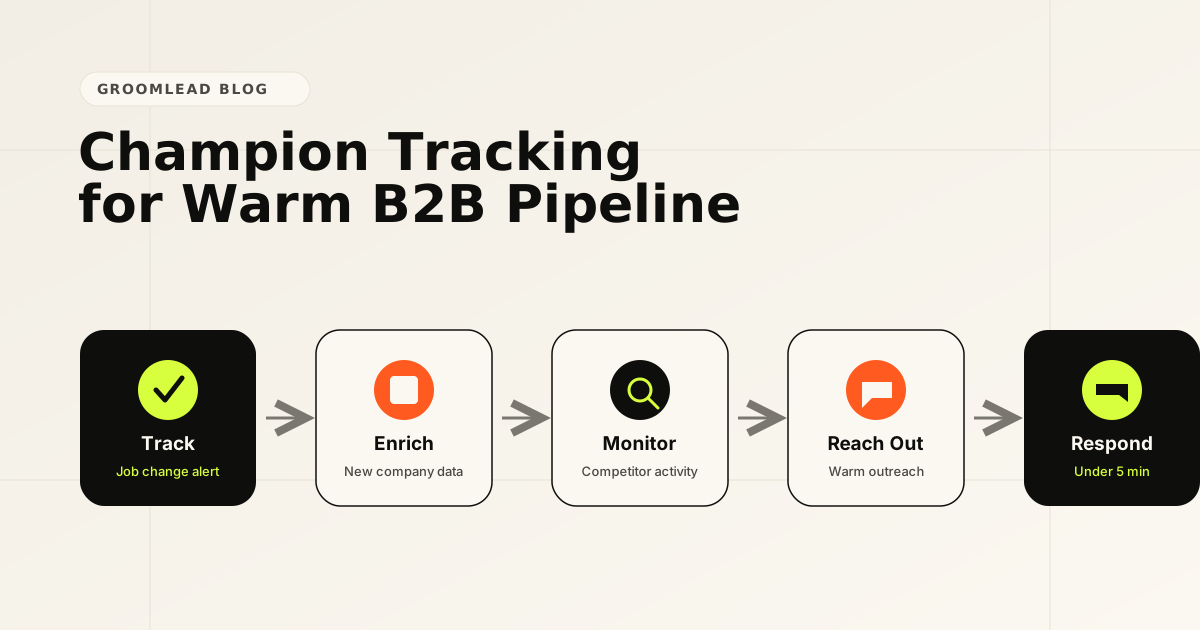
At GroomLead, champion tracking is not a single tool, it is a pipeline of five jobs, each handled by purpose-built software wired together so a job change becomes a booked meeting without a human touching a spreadsheet.
1. Track the job change
Champions watches your existing customer and closed-lost contacts for role changes and alerts your team the moment one moves, syncing directly into Salesforce, HubSpot, or Pipedrive so the signal lands where reps already work.
2. Enrich the new company and role
A job change alert is only useful if you immediately know what the champion’s new company does, what they are now responsible for, and how to reach them. Triguna takes a LinkedIn profile or company identifier and returns structured firmographic and work-history data in a single API call, so the new account is qualified before your first message goes out.
3. Check what competitors are already doing
Before you reach out, it helps to know if a competitor already has a foothold at the champion’s new company. CAM tracks competitors’ new LinkedIn connections and website activity, so you can see if you are walking into open territory or a contested deal.
4. Reach out at the moment of highest intent
Speed matters more here than almost anywhere else in outbound. VSDR deploys an AI virtual sales development rep that researches the new context automatically and writes a personalized LinkedIn or email message referencing the champion’s prior relationship with you, not a generic template.
5. Respond before the moment passes
A champion who replies to a warm outreach message expects a fast, informed answer, not a three-day wait for a human to notice the reply. Underfive.ai categorizes and drafts responses within minutes so the conversation keeps moving while the intent is still hot.
Common mistakes teams make with champion tracking
Treating it as a one-time export. A CSV of past customers pulled once a quarter is stale before anyone reads it. Job changes need continuous monitoring, not a periodic list.
Sending the same sequence as cold outbound. A champion already trusts you. Referencing the specific outcome you delivered at their old company converts far better than a generic first-touch template built for strangers.
Ignoring closed-lost contacts. A champion who could not get budget approved at their old company might have budget authority at their new one. Closed-lost is not dead data, it is a watchlist.
No ownership of the handoff. Job change alerts that land in a shared inbox get missed. Route them to a specific rep with an SLA, the same way you would route an inbound demo request.
A quick-start checklist
- Export every closed-won and closed-lost contact from the last three years into a tracking tool like Champions.
- Set enrichment to run automatically on every job-change alert so new accounts are qualified within minutes, not days.
- Build one outreach sequence specifically for former champions, separate from your standard cold sequence.
- Set a same-day response SLA for any reply from a tracked contact.
- Review win rates on champion-sourced pipeline quarterly against your standard outbound baseline.
Champion tracking will not replace a healthy top-of-funnel outbound motion, but it consistently produces some of the highest win rates in a GTM system, because it starts from trust instead of a cold introduction. If your team is trying to wire these five layers together without hiring a full engineering team to maintain the integrations, that is exactly the kind of system GroomLead builds for clients every day.
Ready to engineer your own GTM system?
GroomLead builds the outbound infrastructure behind 100+ agencies, and the tools inside this post.
Book Strategy Call